
Esophageal injuries are serious medical conditions involving damage to the esophagus, the tube that connects the throat to the stomach. These injuries can occur due to trauma, ingestion of harmful substances, or medical procedures. The esophagus’s location and structure make it susceptible to both blunt and penetrating injuries, with perforations being the most severe form. An esophageal perforation is a complete rupture of the esophageal wall, which can lead to leakage of contents into the mediastinum, causing severe complications like mediastinitis and sepsis.
The symptoms of esophageal injuries vary based on the severity and cause but often include sharp chest pain, difficulty swallowing (dysphagia), and subcutaneous emphysema (air under the skin). In some cases, patients may experience hematemesis (vomiting blood) or signs of systemic infection, such as fever and tachycardia.
Esophageal injuries can result from various causes. Traumatic injuries may occur due to accidents, such as motor vehicle collisions or blunt force trauma. Medical procedures, particularly endoscopies, can occasionally result in accidental perforations. Ingestion of corrosive substances, such as acids or alkalis, is another common cause, particularly in pediatric cases where children accidentally swallow dangerous items like button batteries.
Diagnosis often involves imaging studies, such as a chest X-ray or CT scan, and endoscopic examination to assess the extent of the damage. Treatment depends on the type and severity of the injury. Conservative management, including antibiotics and fasting, may suffice for minor injuries, while surgical intervention is often necessary for more severe perforations to repair the esophagus and prevent complications.
Overall, esophageal injuries require prompt medical attention to prevent life-threatening complications and ensure optimal recovery.
Injury to the esophagus is rare. Foods and liquids pass through the esophagus from the mouth and into the stomach. The esophagus is designed to be a very strong organ and is virtually impervious. Though, if there is an injury, it has to be detected and treated early with surgical intervention. If untreated can lead to serious conditions and complications. Since the esophagus connects from the mouth and into the stomach, it is quite long and thereby for medical clarity has been divided into three parts: cervical – inside the neck, thoracic – inside the chest and abdominal – inside the stomach area.
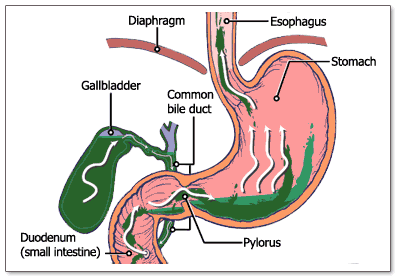
Causes Of Esophageal perforation
Some of the common causes of esophageal injury and perforation are outlined as follows:
- Ingestion of a sharp object: Lacerations, tissue destructions, penetrating injury and iatrogenic injury can be formed on the esophagus as the object is swallowed.
- Forceful vomiting: Extreme pressure is induced during vomiting which can cause rupture of the esophagus
- Ingestion of harmful chemicals: Intake of abrasive, alkaline or acidic chemicals and drugs can harm the esophagus
- GERD: Gastroesophageal reflux disease causes gradual backflow of acid into the stomach and form ulcers in the throat
- Physical trauma: When there is direct injury to the throat due to an accident
Esophageal Perforation Symptoms
Injury to the esophagus can happen in any of the three parts of the esophagus. Patient with injury to esophagus usually feels pain in the area where the injury has occurred. Patients also show a variety of symptoms:
- Severe chest pain under the breast bone with vomiting sometimes associated with fainting
- Dyspnea, rapid and shallow breathing
- Subcutaneous emphysema when air gets beneath the layer of the skin particularly in the area of the chest and neck
- Unrestrained sweating
- High fever
- Retching and vomiting sometimes with blood
- Rapid heart rates
- Dysphagia or difficulty in swallowing
- Hypotension or low blood pressure
Diagnosis Of Esophageal Perforation
CT Scan :A chest CT scan may be conducted to diagnose cancer or ulcer in the esophagus
Chest X-ray: This is a Gastrografin swallow esophagogram where the patient swallows a contrast material to determine the area or site of rupture and injury to the esophagus.
Flex esophagoscopy :This test is done to determine the expanse of injury and perforation whether transmural or mucosal, to the esophagus.